"Felaket başa gelmeden evvel, onu önleyecek ve ona karşı savunulacak gerekleri düşünmek lazımdır. Geldikten sonra dövünmenin faydası yoktur."
(Mustafa Kemal Atatürk)
"Felaket başa gelmeden evvel, onu önleyecek ve ona karşı savunulacak gerekleri düşünmek lazımdır. Geldikten sonra dövünmenin faydası yoktur."
(Mustafa Kemal Atatürk)

CHEMICAL WEAPONS
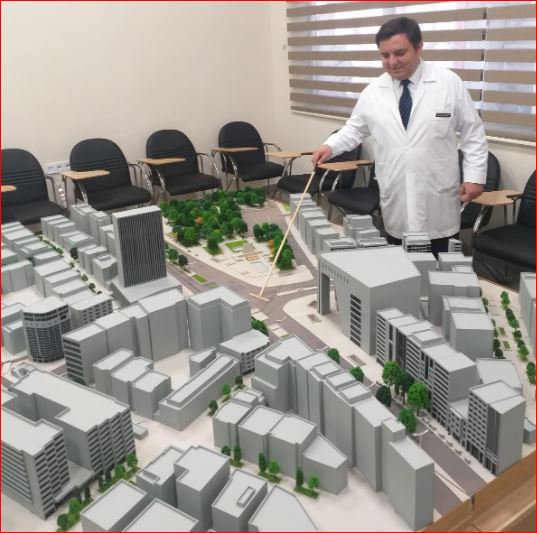
For about 3 decades, I have worked on chemical, biological, and nuclear weapons together with my team, a leading authority in the field of Chemical and Biological Defense.
The geopolitical environment surrounding our country and the dangerous developments within this “ring of fire” have compelled us, as responsible scientists, to focus on this area. Among the risks encountered most frequently in this field are chemical weapons.
Chemical weapons have been used since ancient times, even if only with primitive methods. However, with advances in chemistry, their development and use increased significantly, especially during and after the First World War. Once referred to as “war gases,” chemical weapons are now also being produced and used by terrorist organizations.
In recent years, more than a hundred chemical weapon attacks—large and small—have occurred in neighboring Syria and northern Iraq. These weapons have also been used in various parts of the world for terrorism and assassination. For this reason, it is critically important for our country and our people, located in a sensitive geographical region, to be informed about chemical weapons and to increase public awareness.
Chemical weapons, also known as “Weapons of Mass Destruction,” are not used solely to kill or injure. They can also be employed to contaminate food and water, damage regional economies, target critical institutions, and create fear through sensational attacks.
The primary targets of such weapons are areas where people gather in large numbers, such as shopping malls, metro stations, schools, military units, bus terminals, airports, stadiums, and sports halls.
Although many chemical agents exist, two major groups are stockpiled and ready for use worldwide: nerve agents, which affect the nervous system, and mustard gas, which causes severe damage to the skin and respiratory system.
Nerve Agents
Nerve agents are among the most lethal chemical substances. They enter the body through the eyes, respiratory tract, and skin. Inhalation leads to respiratory failure, difficulty breathing, excessive nasal discharge, and drooling. Within seconds to minutes, symptoms such as blurred vision, headache, runny nose, excessive salivation, and shortness of breath appear.
Without immediate first aid and medical treatment, respiratory arrest, muscle twitching, muscle weakness, loss of consciousness, and loss of bladder and bowel control may occur. Epileptic-type seizures can also be observed, along with constricted pupils.
When liquid nerve agents come into contact with the skin, early symptoms may include nausea and vomiting. Diarrhea, involuntary urination and defecation, and a burning or painful sensation in the chest may also occur.
Survivors of nerve agent exposure may experience persistent drowsiness, short-term memory loss, and headaches for several weeks.
Mustard Gas
Mustard gas is an oily, yellowish liquid and one of the most powerful blistering chemical weapons. Unlike nerve agents, which can cause sudden death, mustard gas has long-term effects and tends to leave permanent damage rather than causing immediate fatalities.
Its effects intensify in hot and humid weather, and the onset of symptoms occurs more rapidly. Since mustard gas is heavier than air, it accumulates in low-lying areas such as trenches and shelters. Upon contact, it causes irritation and burns. Six to eight hours after exposure, swelling develops and painful, fluid-filled blisters appear on the skin. Burns usually emerge several hours after poisoning. The organs most rapidly affected are the lungs, eyes, and skin.
Depending on the body area, swelling may develop under the skin 3–9 days after exposure. The most severely affected regions are warm and moist areas such as the genital region and armpits. The chest, backs of the hands (palms are rarely affected), and the front of the arms are also commonly involved.
Symptoms of mustard gas exposure include headache, nausea, vomiting, severe eye pain, sensitivity to light, and inability to open the eyelids. Temporary blindness may occur. In the respiratory system, pneumonia and fluid accumulation in the lungs may develop.
First Aid and Protection Measures
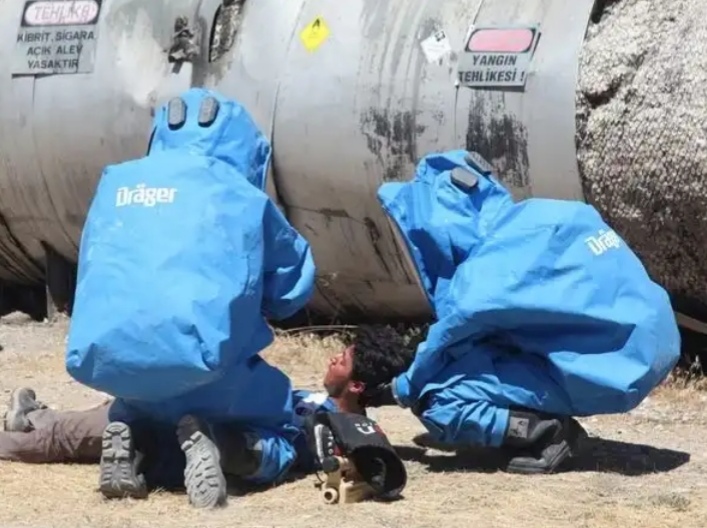
In first aid, the injured person must be removed from the contaminated area as quickly as possible. The most critical step in treatment is decontamination, which involves thoroughly washing the entire body with plenty of water from head to toe. The washing order should be: face, neck, chest, abdomen, arms and hands, followed by other areas.
Although many commercial solutions exist, in chaotic conditions the most effective decontamination agents are soap and water. Bleach can also be used, diluted at a ratio of 1:10 with water. After evacuation, the injured person must be handed over to authorized disaster response teams (AFAD) and Ministry of Health personnel for medical care.
If a chemical attack is suspected in an area, windows and door frames should be sealed with tape and covered with large plastic sheets. Heating devices should not be used, and rooms should not remain sealed for extended periods.
Cloths soaked in diluted bleach may be placed around window and door edges, but prolonged exposure to high levels of chlorine vapor must be avoided. If possible, people should shelter in bunkers or protected basement rooms.
If clothing or skin has been contaminated, residues should be removed as soon as possible using soapy water. Contaminated wastewater must be disposed of without spreading it. Dirty clothing should be sealed in plastic bags and destroyed using bleach or lime.
If there is eye exposure, the eyes should be rinsed continuously with water for 15 minutes.
Liquid and solid foods contaminated by nerve or blister agents must be destroyed and not consumed. In the event of a potential attack, food and water should be stored in glass, tin, or aluminum containers.

CBRN are weaponized or non-weaponized Chemical, Biological, Radiological and Nuclear materials that can cause great harm and pose significant threats in the hands of terrorists or military personnel. Weaponized materials can be delivered using conventional bombs (e.g., pipe bombs), improved explosive materials (e.g., fuel oil-fertilizer mixture) and enhanced blast weapons (e.g., dirty bombs).
Detaylar için Tıklayın